Launch offer — valid today only

📄 Digital book in PDF · read it on your phone or print it

The Industrial Ammonia Plant, Drawn for the Operator Exam Trace the Plant From Compressor to Suction, One Page per Topic

R-717 hazards, reciprocating and screw compressors, the oil separator, the recirculator, liquid overfeed, hand valves, purgers and P&ID symbols. Every topic gets its own page: the drawing first, then what you need to remember. 64 illustrated pages.

YES, I WANT THE ILLUSTRATED BOOK

🔒 Secure checkout · PDF by email · 30-day guarantee

Every topic, its own pageEach component drawn, with the explanation right beside it
64 illustrated pages8 parts, from R-717 hazards to the one-page plant review
Up-to-date sourcesIIAR standards, ASHRAE 15 and OSHA PSM (29 CFR 1910.119)
PDF by emailFormat

Look Inside the Book

Every page has one big drawing and a box with the numbers and steps you need to know:

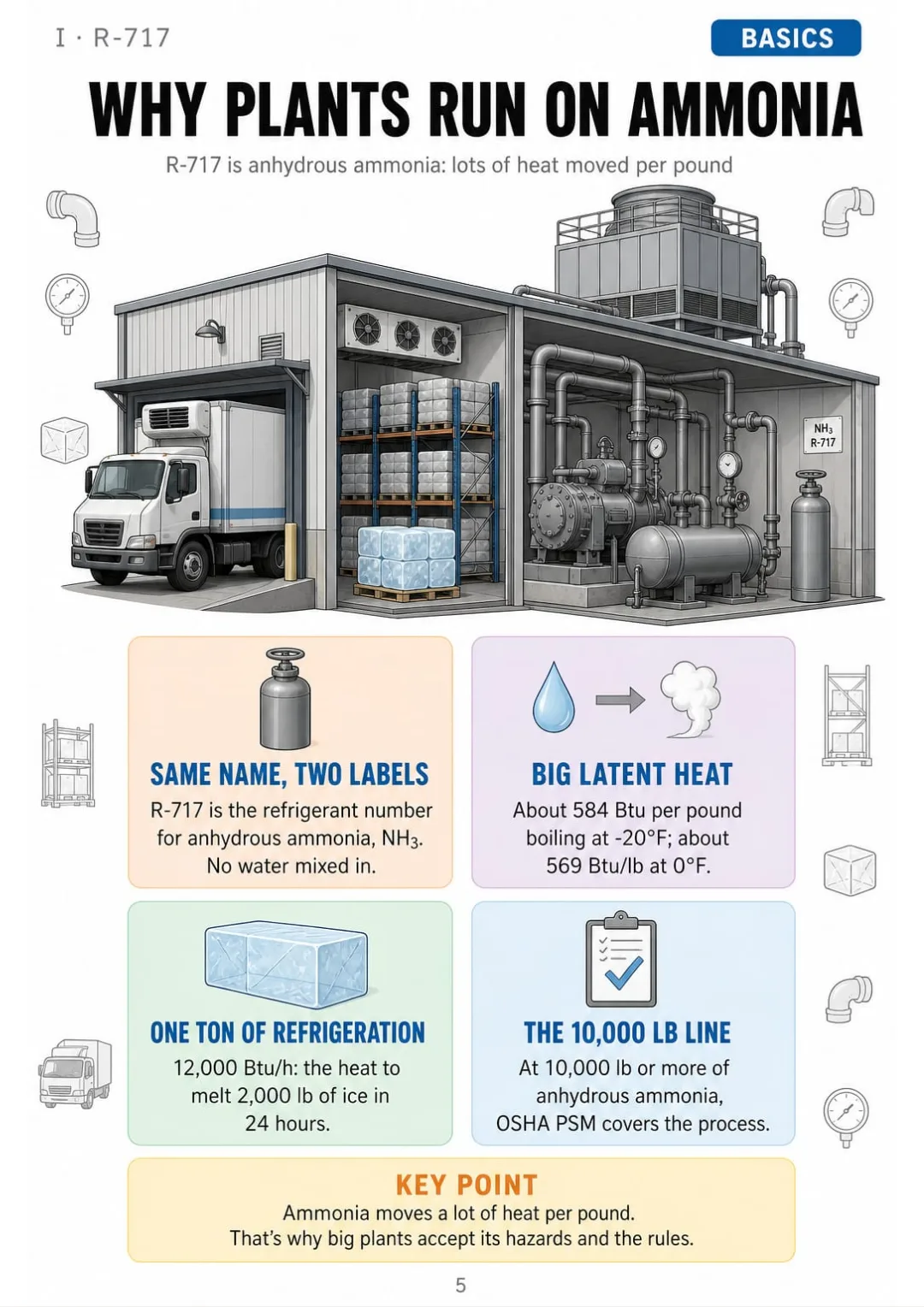
R-717 = anhydrous NH3: about 584 Btu/lb at -20°F, PSM from 10,000 lb.
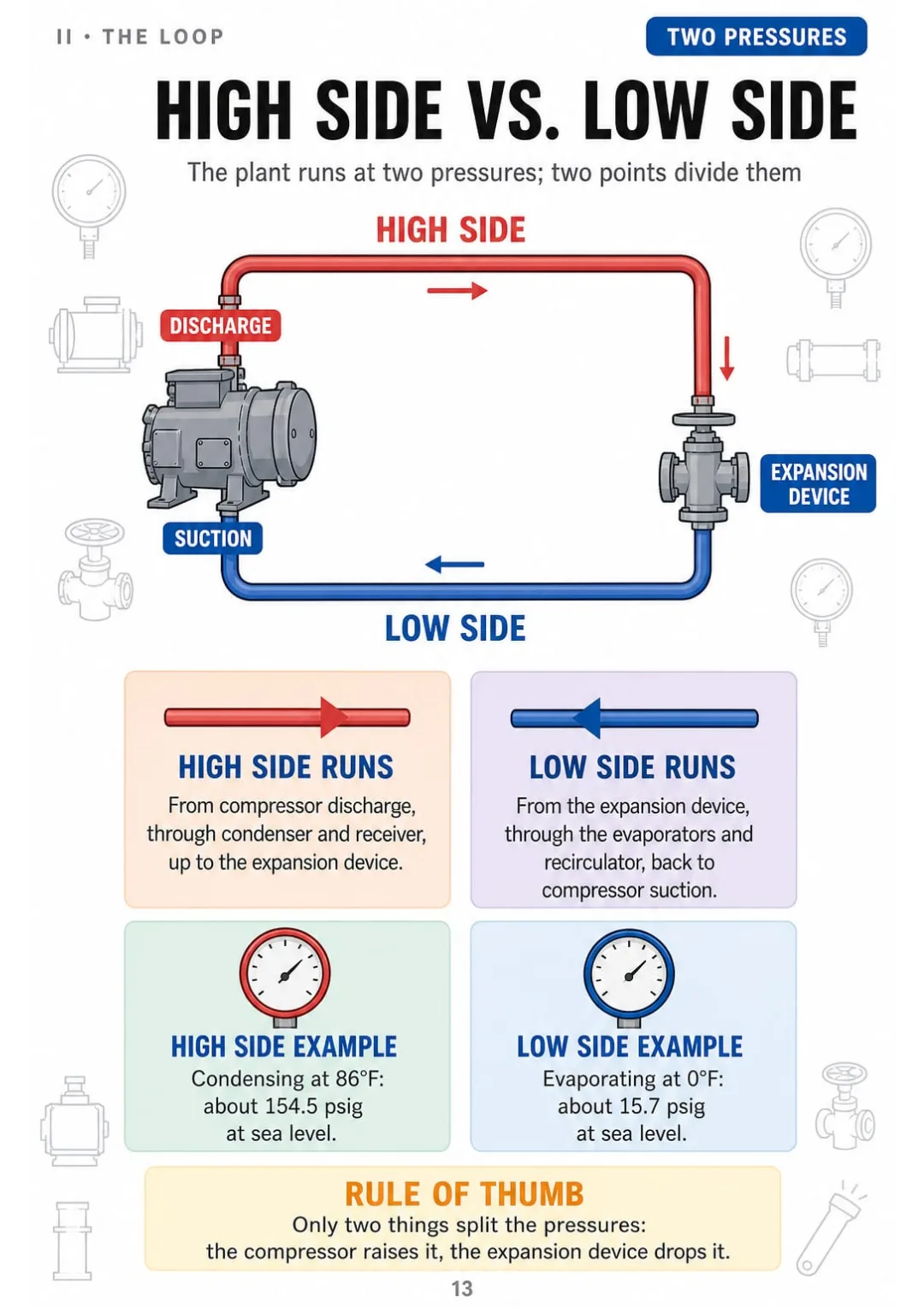
High side: discharge to expansion device. Low side: expansion device back to suction.
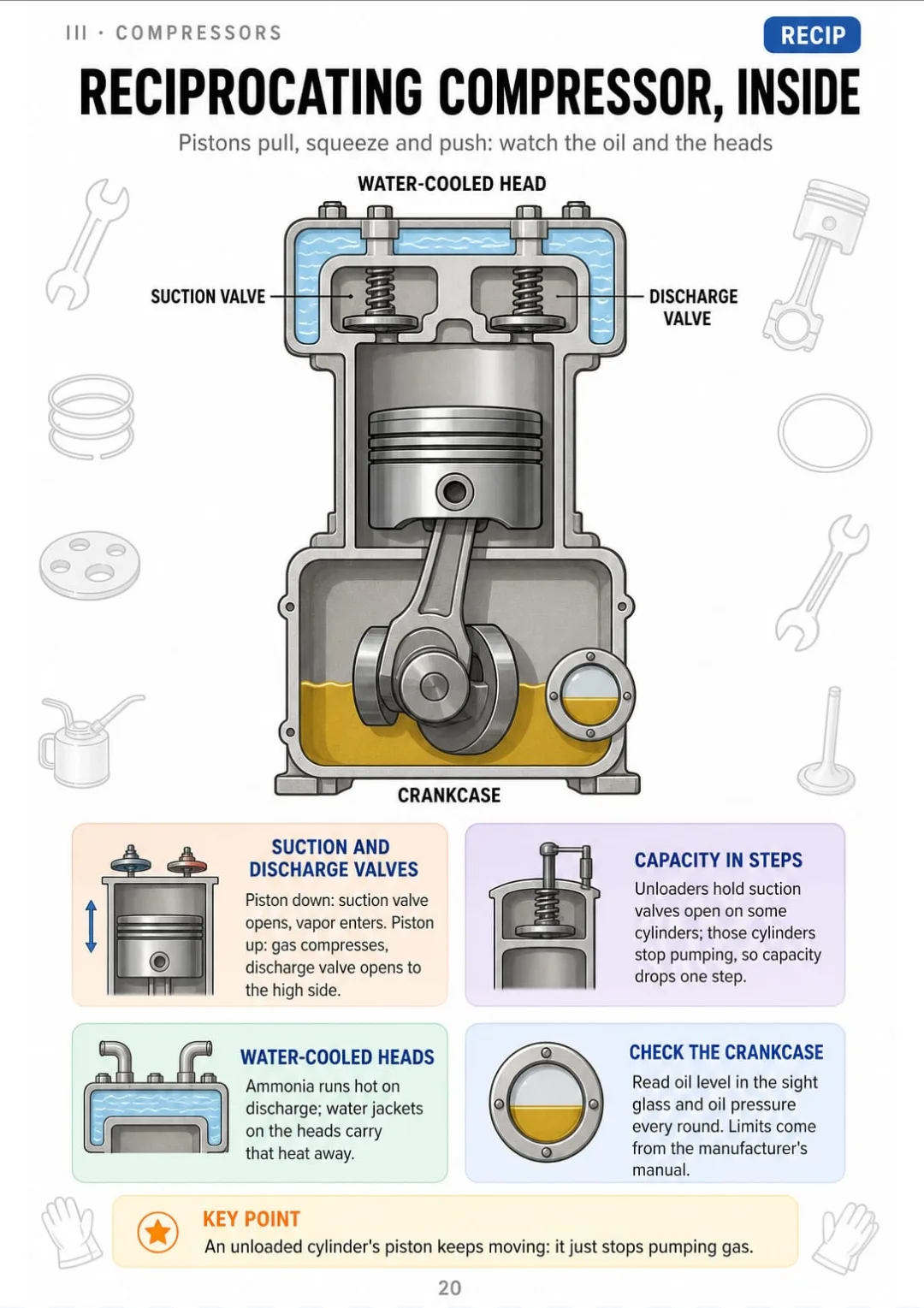
Reciprocating compressor cutaway: suction and discharge valves, unloaders, water-cooled heads and the crankcase sight glass.
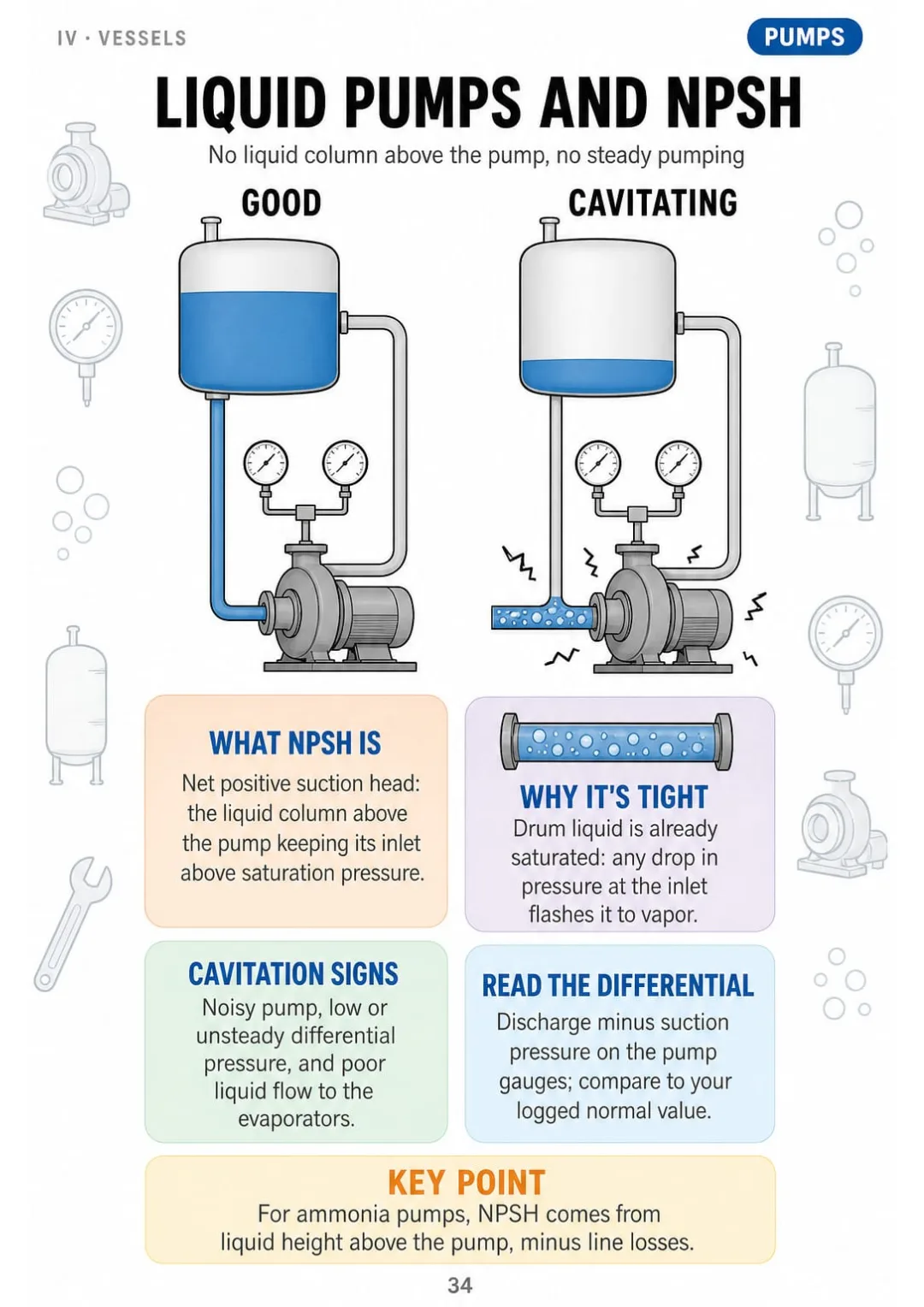
Missing liquid head means flashing, noise and a low differential on the pump gauges.
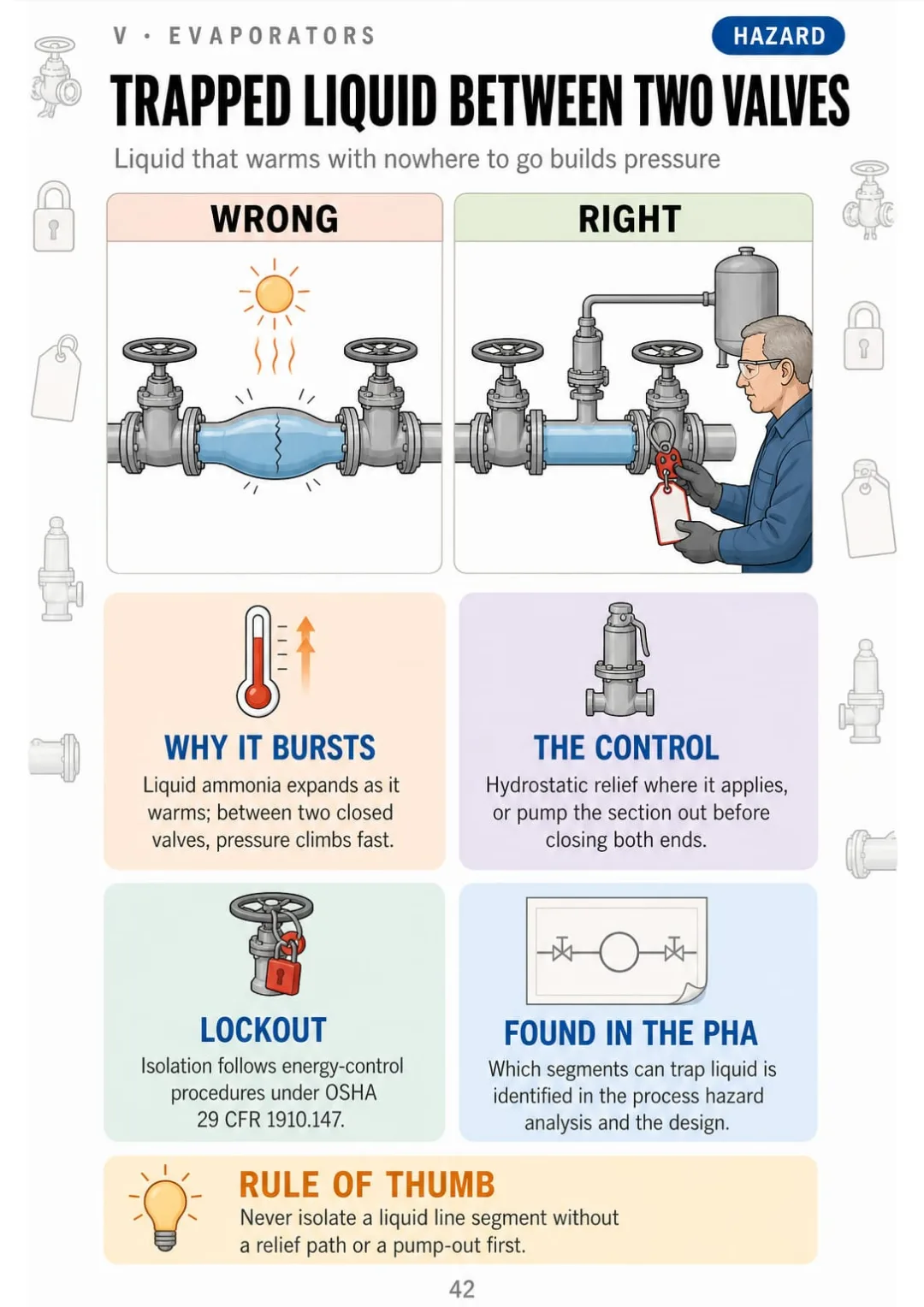
Trapped liquid: wrong vs. right, with relief path, pump-out and lockout.
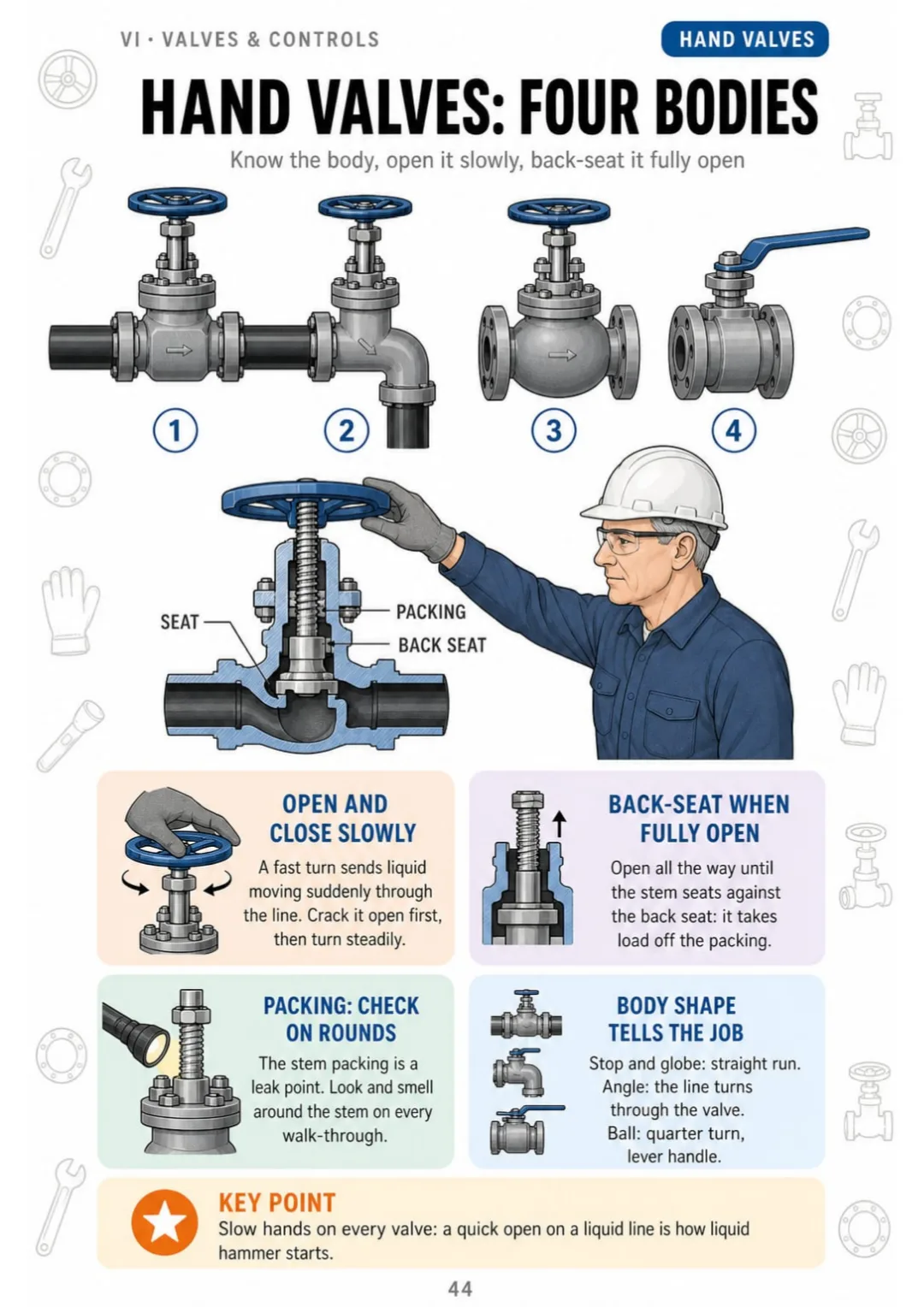
Stop, angle, globe and ball valves, with seat, packing and back seat drawn in a cutaway.
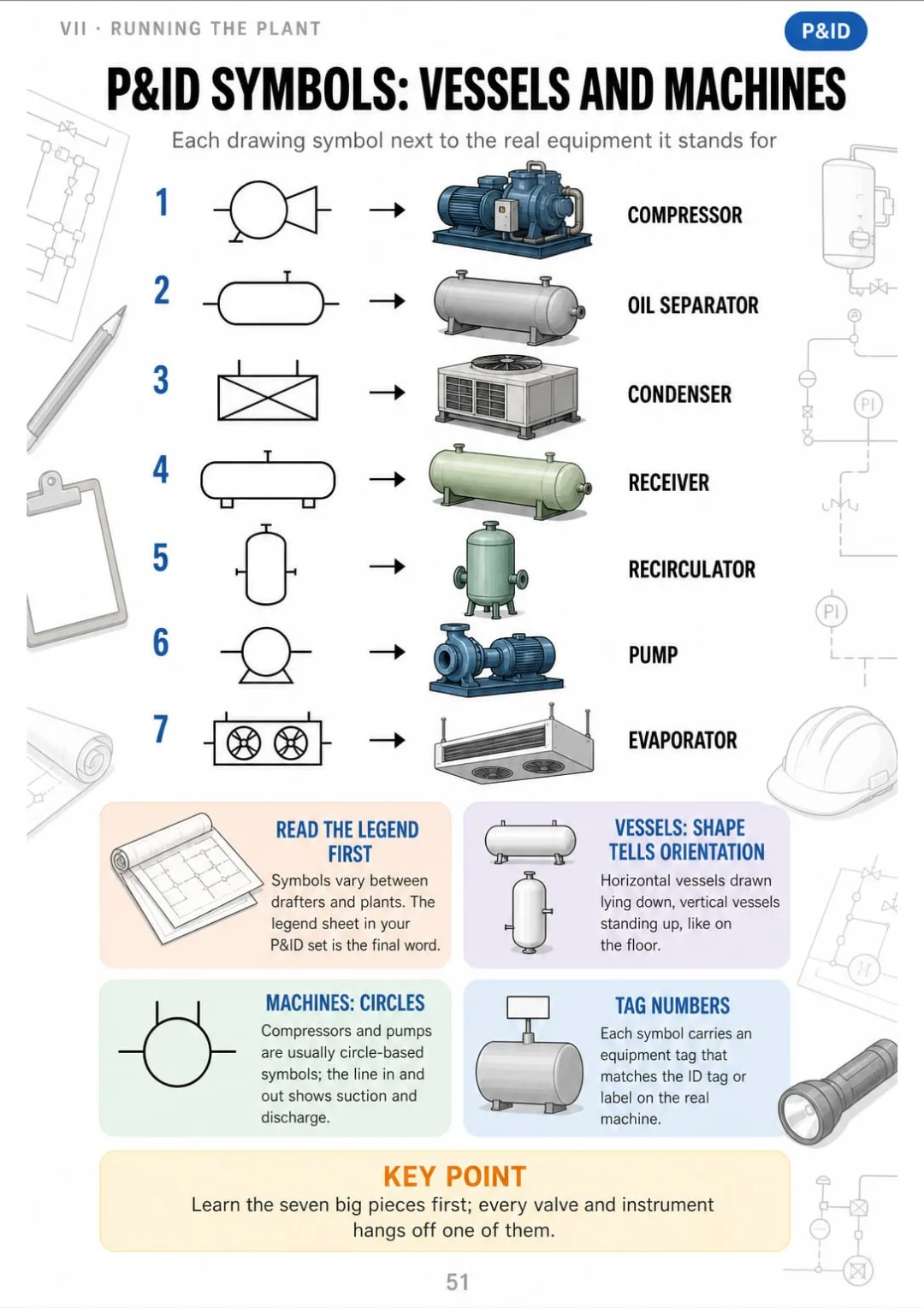
Compressor, oil separator, condenser, receiver, recirculator, pump, evaporator: symbol vs. real equipment.
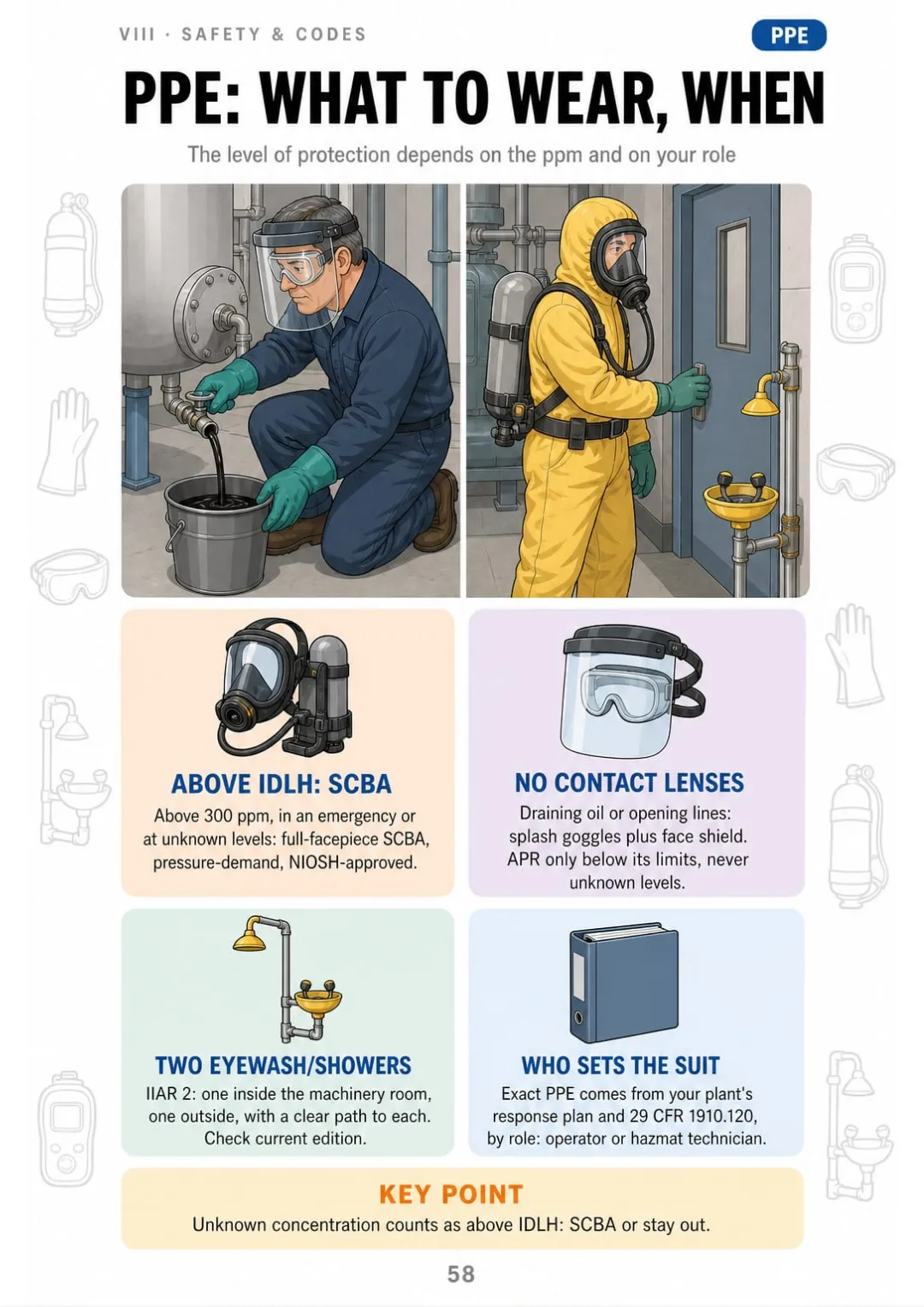
IDLH 300 ppm: above it, or unknown, full-facepiece positive-pressure SCBA.

Swipe to see more →

These are real pages from the book. The table of contents is the full one: 8 parts and 60 topics.

The Problem Isn't You. It's How It Was Explained to You.

You're standing next to the reciprocating compressor and your supervisor asks what the unloaders are doing right now. You know that machine by its sound, not by what's inside it.

The manual covers suction valves, discharge valves, unloaders and heads in three long paragraphs. Nothing shows you where each part sits or which way the gas moves.

Reciprocating compressor cutaway: suction and discharge valves, unloaders, water-cooled heads and the crankcase sight glass.

In the book, that compressor is one page: a cutaway with the suction and discharge valves, the unloaders, the water-cooled heads and the crankcase sight glass. You see the gas come in, get compressed and leave.

The screw compressor, the oil separator, the recirculator, the purger and the P&ID symbols each get their own page too, laid out in the order the ammonia flows.

So the next time the question comes, you point at the part and explain it without going back to the manual.

COMPARE FOR YOURSELF

Same Topic, Two Ways to Study It

THIS
  • The manual: line after line of text
  • The refrigeration loop explained only in words
  • You walk into the exam with doubts
In a typical industrial ammonia refrigeration system, superheated refrigerant vapor is discharged from the compressor at elevated pressure and temperature and routed to the oil separator, where entrained lubricant is removed before the vapor proceeds to the condenser. Heat rejection in the condenser results in a phase change to saturated liquid, which drains to the high-pressure receiver. Liquid is subsequently metered to the recirculator, from which mechanical pumps deliver it to the evaporators at an overfeed rate, and the resulting two-phase mixture returns to the recirculator, where vapor separation occurs prior to compressor suction.
FOR THIS
  • The whole loop in one drawing
  • The flow order in one box
  • An arrow from each vessel to the next, back to suction
High side: discharge to expansion device. Low side: expansion device back to suction.
CONTENTS

Take a Look at the 8 Parts and 60 Topics

R-717 basics, the pressure-temperature loop, compressors, vessels, evaporators and liquid feed, valves and purging, P&IDs and plant operation, and safety and codes: 64 pages, all illustrated.

IR-717: Know What's in the Pipes · pp. 5-11
  1. Why Plants Run on Ammonia
  2. Boiling Point: -28°F at 0 psig
  3. The Exposure Numbers on One Ruler
  4. Flammable, but Only in a Window
  5. Lighter Than Air… Except When It Isn't
  6. Ammonia Loves Water
  7. No Copper, No Brass
IIThe Loop: Pressure and Temperature · pp. 12-19
  1. The Whole Plant on One Page
  2. High Side vs. Low Side
  3. Saturation: One Pressure, One Temperature
  4. psig, psia and Inches of Vacuum
  5. Worked Example: Gauge to Temperature
  6. Superheat and Subcooling
  7. Tons, Btu and Heat Moving Uphill
  8. Compression Ratio
IIICompressors · pp. 20-27
  1. Reciprocating Compressor, Inside
  2. Rotary Screw Compressor, Inside
  3. Slide Valve: Capacity Control
  4. Volume Ratio (Vi)
  5. Oil Pressure and Oil Temperature
  6. Two-Stage: Booster, Intercooler, High Stage
  7. Economizer on a Screw
  8. Compressor Safeties
IVVessels and Heat Exchangers · pp. 28-35
  1. Oil Separator
  2. Evaporative Condenser
  3. High-Pressure Receiver
  4. Thermosiphon Oil Cooling
  5. Recirculator (Pumper Drum)
  6. Why the Recirculator Level Rises
  7. Liquid Pumps and NPSH
  8. Intercooler and Controlled-Pressure Receiver
VEvaporators and Liquid Feed · pp. 36-43
  1. Three Ways to Feed an Evaporator
  2. Liquid Overfeed and the Overfeed Ratio
  3. The Evaporator Valve Group
  4. Air Units, Plate Freezers, Spiral Freezers
  5. Hot Gas Defrost: The Sequence
  6. Hydraulic Shock: Liquid Hammer
  7. Trapped Liquid Between Two Closed Valves
  8. Superheat at the Coil Outlet
VIValves, Controls and Purging · pp. 44-50
  1. Hand Valves: Stop, Angle, Globe, Ball
  2. Solenoids and Check Valves
  3. Pressure Regulators
  4. Relief Valves and the Dual Relief Manifold
  5. Noncondensables and the Purger
  6. Level Controls and Floats
  7. Ammonia Detectors and Alarms
VIIReading P&IDs and Running the Plant · pp. 51-57
  1. P&ID Symbols: Vessels and Machines
  2. P&ID Symbols: Valves and Instruments
  3. Tracing a Line on a P&ID
  4. Pipe Labels on the Floor
  5. The Operating Log: What Each Reading Tells You
  6. Draining Oil: Step by Step
  7. Pumping Down a Component
VIIISafety, Codes and Review · pp. 58-64
  1. PPE: What to Wear, When
  2. Exposure First Aid
  3. Emergency Shutdown and the King Valve
  4. PSM and RMP: The 10,000 lb Line
  5. The IIAR Standards Map
  6. Exam Topics Checklist
  7. One-Page Plant Review

One Page, One Topic, All Clear

Think of it this way:

Your shift lead hands you the P&ID and asks you to trace the liquid from the high-pressure receiver to the freezer coils. He waits while you look for where to start.

In the book you open the page with the whole plant and see one loop: compressor, oil separator, condenser, receiver, recirculator, evaporator and back to suction. Every vessel has its place, and an arrow shows where the ammonia goes next.

Trapped liquid: wrong vs. right, with relief path, pump-out and lockout.

Same with the oil separator, the three ways to feed a coil, the four hand valve bodies, the P&ID symbols and the PPE above 300 ppm: each one on its own page.

Ammonia Refrigeration Illustrated is 8 parts and 60 topics, all drawn, and it closes with an exam topics checklist and a one-page plant review.

What you see drawn, you don't have to memorize.

What's Inside Ammonia Refrigeration Illustrated:

Ipp. 5-11

R-717: Know What's in the Pipes

Why plants run on ammonia, its boiling point, the exposure numbers on one ruler, when it burns, how it moves in air and water, and why copper and brass stay out.

IIpp. 12-19

The Loop: Pressure and Temperature

The whole plant on one page, high side vs. low side, saturation, psig and psia, a worked gauge-to-temperature example, superheat, subcooling, tons and compression ratio.

IIIpp. 20-27

Compressors

Reciprocating and screw compressors cut open, slide valve, Vi, oil pressure and temperature, two-stage systems, the economizer and compressor safeties.

IVpp. 28-35

Vessels and Heat Exchangers

Oil separator, evaporative condenser, high-pressure receiver, thermosiphon oil cooling, the recirculator and why its level rises, liquid pumps and NPSH, intercooler.

Vpp. 36-43

Evaporators and Liquid Feed

Three ways to feed a coil, overfeed ratio, the evaporator valve group, air units and freezers, the hot gas defrost sequence, liquid hammer and trapped liquid.

VIpp. 44-50

Valves, Controls and Purging

Stop, angle, globe and ball valves, solenoids and checks, regulators, relief valves and the dual manifold, noncondensables and the purger, level controls and detectors.

VIIpp. 51-57

Reading P&IDs and Running the Plant

P&ID symbols for vessels, machines, valves and instruments, tracing a line, pipe labels, the operating log, and draining oil and pumping down step by step.

VIIIpp. 58-64

Safety, Codes and Review

PPE and when to wear it, exposure first aid, emergency shutdown and the king valve, PSM and RMP, the IIAR standards map, the exam checklist and the plant review.

At the end of the book: An exam topics checklist and the whole plant reviewed on one page.
Plus: 2 Free Books

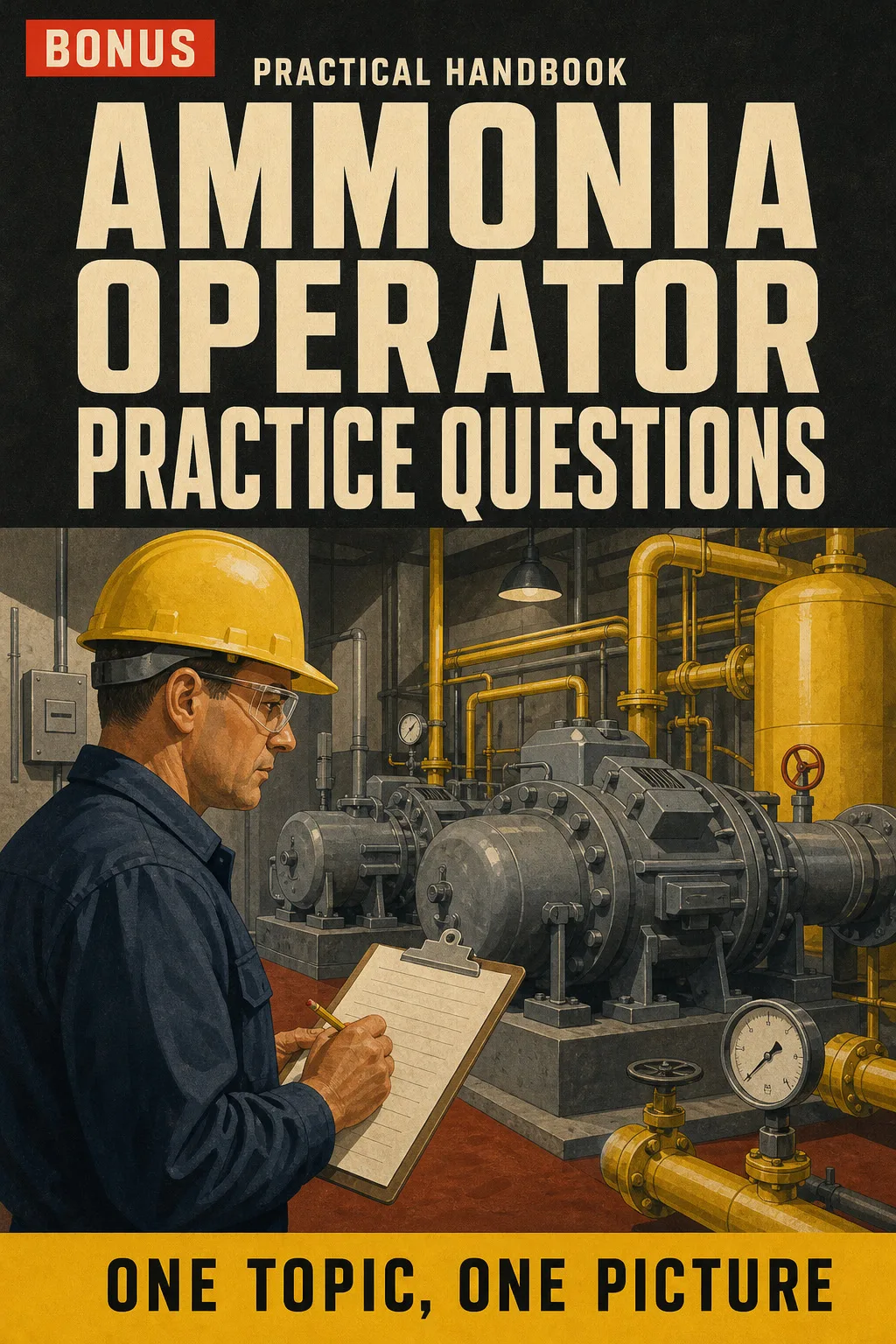
Ammonia Operator Practice Questions

BONUS 1: «Ammonia Operator Practice Questions»

Value on its own: US$ 17.90

Exam-style questions on every chapter, each with the answer and the page that explains it, so you find out what you really know before exam day.

15 Common Engine-Room Mistakes, Before & After

BONUS 2: «15 Common Engine-Room Mistakes, Before & After»

Value on its own: US$ 14.90

The operating mistakes made most often in ammonia plants, each drawn as the wrong way next to the right way, so you can spot them at a glance on your next shift.

Ammonia Refrigeration Illustrated with 2 Free Books

  • Ammonia Refrigeration Illustrated: 64 illustrated pagesUS$ 63
  • BONUS 1: Ammonia Operator Practice QuestionsUS$ 17.90
  • BONUS 2: 15 Common Engine-Room Mistakes, Before & AfterUS$ 14.90
  • High-resolution PDF to printIncluded
Total value US$ 95.80
YOUR PRICE:
US$ 27
You save US$ 68.80
YES, I WANT AMMONIA REFRIGERATION ILLUSTRATED FOR US$ 27

📄 This is a digital PDF book sent to your email: nothing is printed or shipped.

Secure purchaseEncrypted payment30-day guarantee

PDF by email: We email you Ammonia Refrigeration Illustrated as a PDF, together with the two free books. It's a single payment: no installments, no extra charges.

Who This Book Is For

You're studying for the operator certification

You're studying for the operator certification

You get the plant as one loop, from compressor to suction, instead of a list of vessels and valves. Each topic is a drawing you can come back to in the same order.

Your exam is a few weeks away

Your exam is a few weeks away

You review part by part with the exam topics checklist and the practice questions, and see where you still have gaps.

You already run the engine room

You already run the engine room

You print it and keep it by the log. The P&ID symbols, the valve bodies and the PPE are there when a new operator asks.

Everything You Get Today

US$ 95.80US$ 27
YES, I WANT AMMONIA REFRIGERATION ILLUSTRATED FOR US$ 27

📄 This is a digital PDF book sent to your email: nothing is printed or shipped.

30DAYS
GUARANTEE

30-Day Guarantee

Try Ammonia Refrigeration Illustrated for 30 days, bonus books included.

We refund everything if the file won't open, if the book isn't what you see here, if you were charged twice or if the email doesn't arrive. Just email us.

You pay once. No subscriptions.

Frequently Asked Questions

Is it for me if I've worked in the plant for years but never studied the ammonia system on paper?

Yes. It starts from what you already see on the floor and puts it in order, one component per page. It doesn't stop at the basics: Vi and the slide valve, two-stage systems and the economizer, NPSH on the liquid pumps, the hot gas defrost sequence and tracing a P&ID line each get their own page. If you know the plant by ear, this is where it fits into one loop.

Where does the content come from?

From the IIAR standards, ASHRAE 15, OSHA PSM (29 CFR 1910.119) and EPA RMP (40 CFR Part 68), and the published body of knowledge for industrial refrigeration operators. Every code reference is flagged so you check it against the current edition.

Is it official material?

No. It's independent study material, not affiliated with or endorsed by RETA, IIAR or any agency. It covers the topics operators review for certifications such as RETA's CARO and CIRO; check your exam's current outline.

Does it replace the course or my company's training?

No. It helps you study and review. Your company's training, your plant's written procedures and lockout/tagout always come first.

Are the practice questions the ones on the exam?

No. They're written for this book to help you check what you know. They aren't official questions from any exam.

When and how do I get it?

The book and the 2 bonus books come as PDFs by email, to the address you enter at checkout.

Do I have to pay every month?

No. It's a one-time payment.

Can I have it on paper?

We don't ship a printed book. You get a PDF by email that you can print, the whole book or just the pages you need, and keep in the engine room or next to the log.

How does the refund work?

You have 30 days. We refund everything if the file won't open, if the book isn't what you see on this page, if you were charged twice or if the email doesn't arrive: just email us.

Before You Close This Page

No more rereading without anything sticking.

The ammonia loop stops being a list of names: you see it drawn, in order.

You walk into the exam knowing where every part goes.

Drawings make studying faster.

The book is right below.

One-time payment: US$ 27 · Guarantee: 30 days · PDF by email

YES, I WANT AMMONIA REFRIGERATION ILLUSTRATED FOR US$ 27

📄 This is a digital PDF book sent to your email: nothing is printed or shipped.